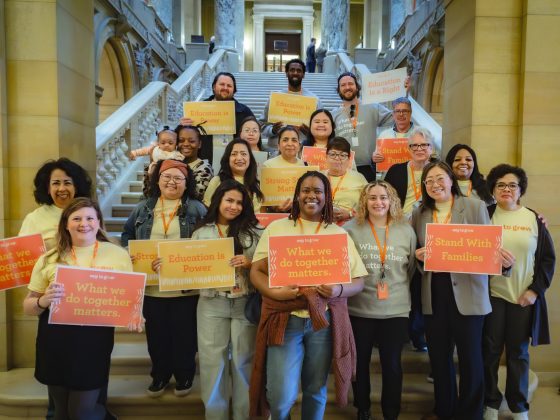
Way to Grow knows that every child should feel seen, valued, and supported in their learning journey. For families who speak languages other than English at home, this means honoring and building on the rich foundation children already have.
Dual Language Learners Today
One in three children under age six in the United States grows up learning two languages at once. These children, called dual language learners (DLLs), develop skills in both their home language and English at the same time. Over 60% of these young learners come from Spanish-speaking homes, making Spanish-English the most common pairing in early childhood programs (Migration Policy Institute, 2023).
In Minneapolis and across the Twin Cities, many Way to Grow families speak Spanish, Somali, Hmong, and other languages at home. These families often wonder: “Will learning two languages confuse my child? Should we only speak English at home to help them succeed in school?”
The answer from decades of research is clear: maintaining your home language doesn’t hold children back. Instead, it helps them thrive.

What Research Tells Us About Learning Two Languages
Scientists have studied children who grow up with two languages for over 50 years. The findings consistently show that learning two languages from an early age strengthens children’s brains and supports long-term success.
Stronger Brain Development
Children who learn two languages from birth develop different patterns of brain activity than children learning one language. Research from the University of Washington shows that even infants as young as seven months who regularly hear two languages demonstrate greater brain activity in regions linked to attention and focus (Institute for Learning & Brain Sciences, 2016). This early exposure to two languages provides practice in skills like paying attention, switching between tasks, and solving problems—abilities that support learning throughout childhood.
Better Academic Performance
Children who speak two languages often show strong skills in both literacy and math. Furthermore, learning two languages helps children understand how language works, which supports reading development and flexible thinking (National Academies of Sciences, Engineering, and Medicine, 2017).
Improved Memory and Focus
Managing two languages requires the brain to work harder at storing and retrieving information. Research suggests that children exposed to two languages often develop strong working memory and attention skills. Additionally, they may become more skilled at filtering out distractions and staying focused on tasks (Knowable Magazine, 2024).
How Home Language Connects to School Success
When families maintain their home language, children gain much more than vocabulary. They build a bridge between home and school, between family culture and classroom learning.
Building Cultural Identity
When children see that their language and culture are valued, they develop confidence and pride. This positive self-image proves essential for healthy development and academic success. Moreover, children who feel connected to their cultural roots show greater resilience when facing challenges (National Association for the Education of Young Children, 2024).
Strengthening Family Connections
Speaking the home language keeps children connected to grandparents, extended family, and cultural traditions. These relationships strengthen children’s well-being by offering emotional support and a deep sense of belonging. For instance, grandparents who share stories in their native language pass down family history and cultural wisdom that enriches a child’s identity.
Supporting Skill Transfer
Skills learned in one language transfer naturally to another. When children learn to count in Spanish or tell stories in Somali, they build skills that support their English learning too. This concept, called linguistic interdependence, means that strong foundation skills in any language support learning in all languages (Colorín Colorado, 2024).
Way to Grow’s Language-to-Language Approach
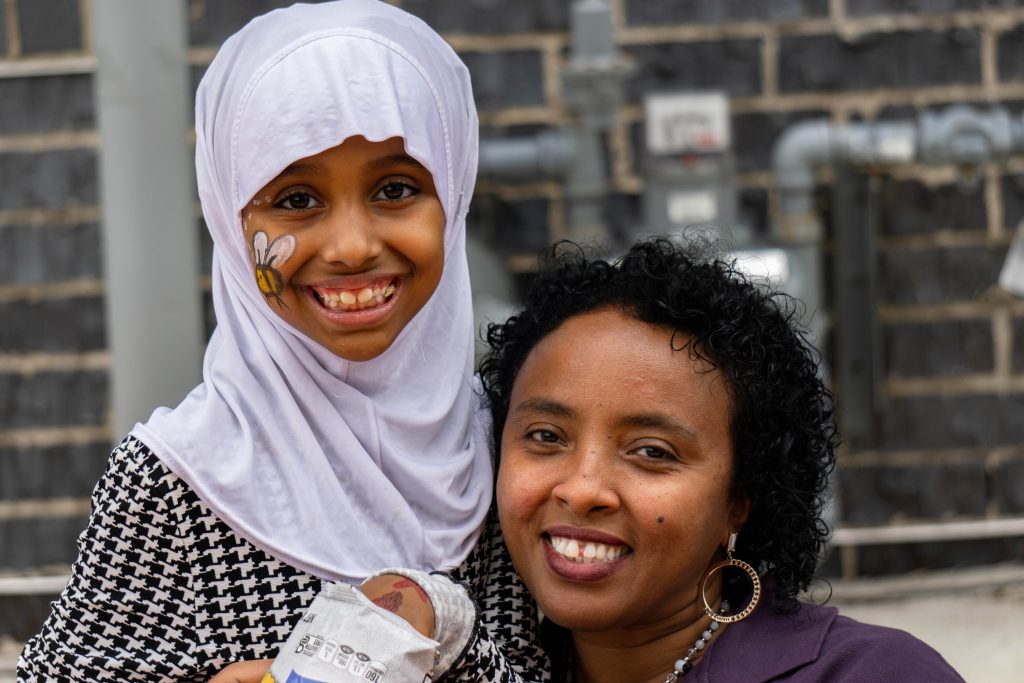
Way to Grow works language-to-language with families whenever possible. Our Family Educators meet families in the language they speak at home—whether Spanish, Somali, Hmong, French, Amharic, Arabic, or English—building trust and understanding from the first visit.
Our team doesn’t just translate words. Instead, we work culture-to-culture, honoring the traditions, values, and strengths each family brings. During home visits, educators provide books, learning materials, and activities in multiple languages. This enables children to learn and grow in ways that feel natural and familiar.
This approach does more than show respect, it creates the positive conditions children need to grow and learn. When we support families in their home language, several important things happen:
- Parents feel more confident asking questions
- Children stay connected to their cultural roots
- Learning happens more naturally and effectively
- Families access resources and information more easily
Whether we model early literacy activities, discuss child development, or connect families to community resources, working language-to-language ensures every family gets the support they deserve. Learn more about our bilingual programming and family services.
What This Means for Your Family
If you speak a language other than English at home, keep speaking it with confidence. Read books, sing songs, and tell stories in your home language. These everyday moments build your child’s brain, strengthen family bonds, and prepare them for success in school and beyond. Research shows that children who stay connected to their home language while learning English enter kindergarten with cognitive advantages that serve them throughout their education (Harvard Graduate School of Education, 2024).
Next Steps
In our next post, we’ll explore the specific cognitive benefits of learning two languages. We’ll also share practical tips for maintaining home language while supporting English development. Want to learn more about Way to Grow’s language-to-language programming? Visit our impact page or enroll your family today!