Way to Grow knows that November’s chilly weather creates the perfect excuse to gather around the table for something special: game time! While the wind blows outside, families can build memories, strengthen connections, and help children learn important skills. Best of all, everyone has fun together!
How Games Build Learning
Play isn’t just entertainment. In fact, it’s one of the most powerful ways children learn. Board games and card games teach skills children will use throughout their lives, from math and reading to problem-solving and emotional regulation.
When families play games together, children naturally learn:
- Turn-taking and patience: Waiting for your turn teaches self-control
- Following rules: Understanding and following game rules builds structure
- Counting and strategy: Many games involve math skills and planning ahead
- Winning and losing gracefully: Games teach how to celebrate success and handle disappointment
- Teamwork: Cooperative games show how working together leads to success
These lessons stick because they happen naturally during play. Children don’t feel like they’re being taught. Instead, they’re just having fun with people they love.
Classic Games That Build Skills
The best family games can come from your own childhood, as well as grandma’s and grandpa’s treasured favorites. Furthermore, many classic games can be found tucked away in closets, stored under beds, or sitting on thrift store shelves. You don’t need to spend money on new games. Instead, these tried-and-true gems work beautifully:
For Younger Children (Ages 3-6)
- Candy Land: Teaches color recognition, counting, and turn-taking. Additionally, it’s perfect for preschoolers learning game basics.
- Chutes and Ladders: Builds counting skills and helps children understand consequences (going up or sliding down).
- Memory/Matching Games: Strengthens memory, concentration, and visual recognition skills.
For Early Elementary (Ages 6-9)
- Uno: Teaches number and color matching, strategy, and quick thinking. Moreover, it’s easy to learn and fast-paced.
- Connect Four: Builds spatial reasoning and strategic planning as players think ahead to block opponents.
- Trouble: Combines counting, strategy, and friendly competition in an engaging format.
For All Ages (6+)
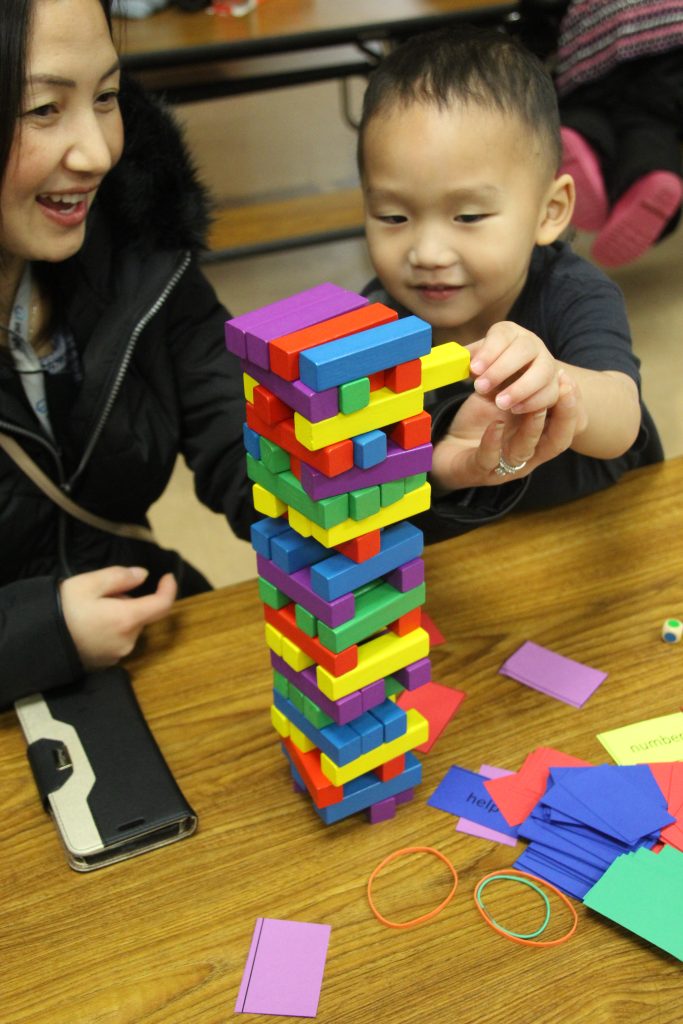
- Jenga: Develops fine motor skills, patience, and careful thinking. As a result, it creates excitement for the whole family.
- Dominoes: Teaches number matching, counting, and strategic thinking across generations.
- Go Fish: A simple card game that builds memory, number recognition, and social skills.
Games for Little Learners
Don’t forget your youngest family members. Even toddlers can participate in game time with age-appropriate activities:
- Simple sorting activities with colors or shapes
- Stacking blocks or cups together
- “I Spy” games using colors or objects around the room
The goal is never perfection. Rather, it’s participation and connection.
Budget-Friendly Game Options
You don’t need to spend a lot to build a great game collection. Here are some smart ways to find games:
- Check Your Own Home: Look in closets, attics, and storage spaces. You might rediscover games from your own childhood that are perfect for sharing with your children.
- Thrift Stores and Garage Sales: Goodwill, the Salvation Army, and yard sales often have classic board games for just a few dollars. However, be sure to check that all pieces are included or have fun creating your own.
- Library Game Collections: Many public libraries lend board games and puzzles along with books. For example, the Hennepin County Library has a growing game collection families can borrow for free.
- Dollar Stores: Card games, dice, and simple board games are often available at dollar stores for budget-friendly options.
DIY Games
Create your own games using items around the house:
- Draw a tic-tac-toe grid on paper
- Make bingo cards with markers or crayons
- Play charades or “20 Questions” with no materials needed
Tips for Successful Game Time
- Keep It Regular: Pick a consistent time each week like Friday or Sunday evening. As a result, games become a family tradition.
- Start Short: Especially with young children, keep sessions to 20-30 minutes. However, you can always play longer if everyone’s having fun.
- Mix It Up: Rotate who chooses the game so everyone gets to play their favorites.
- Focus on Fun, Not Winning: Celebrate effort and good sportsmanship as much as winning. In addition, help children learn that playing together matters more than the score.
- Include Snacks: Simple snacks like popcorn, apple slices, or crackers make game time feel special.
Learning Through Play at Way to Grow
Research shows children learn best through play and positive interactions with caregivers. Consequently, game time creates exactly these conditions—focused time together, laughter, gentle challenges, and opportunities to practice new skills in a supportive environment.
Way to Grow Family Educators understand the power of play. During home visits, they model age-appropriate games and activities that families can continue using long after the visit ends. Whether it’s simple counting games for toddlers or strategy games for school-age children, play-based learning helps children develop skills they’ll use throughout their lives.
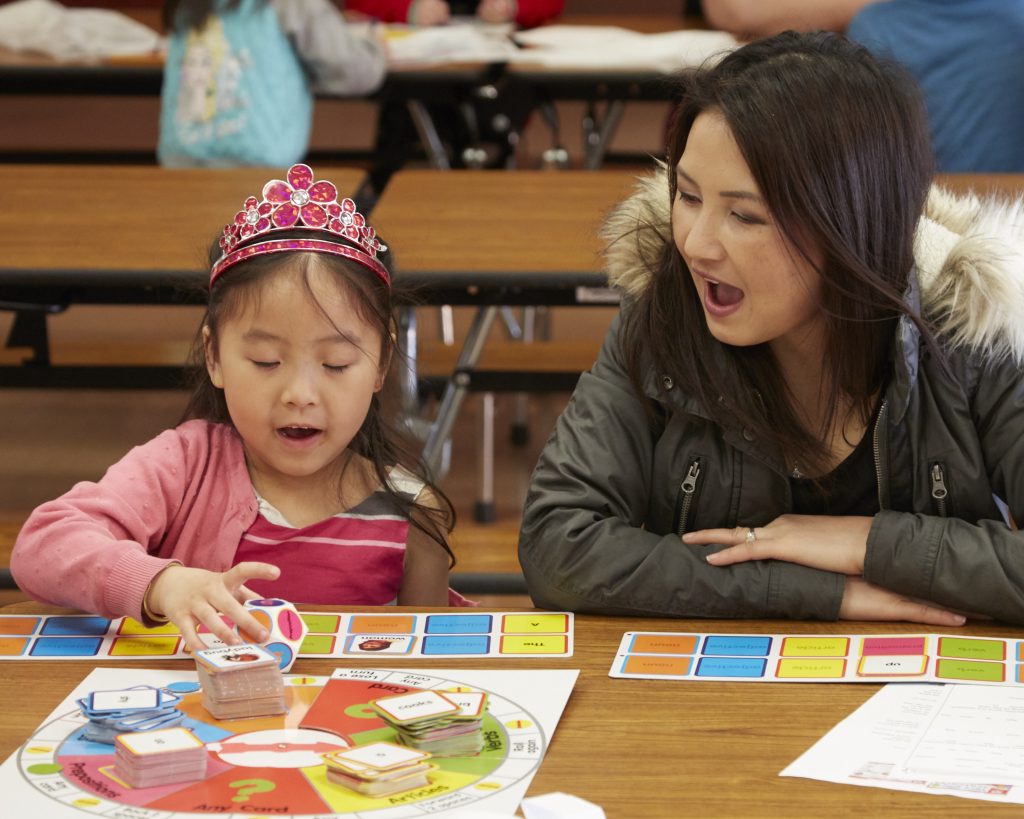
Our family groups bring this philosophy to life. Families from across the community gather to play together, meet other families, and discover new games that work for their children’s ages and interests. These events show that learning doesn’t have to feel like work. Rather, it can be joyful, social, and fun.
For more ideas on learning through play, check out this helpful resource from the National Association for the Education of Young Children on the benefits of play.
Start Your Own Game Time Tradition
This fall, turn off screens, gather around the table, and rediscover the joy of playing together. Whether you’re teaching your preschooler to count spaces or challenging your third grader to a strategic showdown, game time creates memories and builds skills that last.
What games will you play first? Share your game time photos with Way to Grow on social media. We’d love to see the fun!