
As older children settle into classrooms this fall, try one simple math game with your littlest learner at home. You don’t need a lesson plan, worksheets, flash cards, or a special activity. Just start with what’s already on your preschooler’s plate.
Snack time is full of opportunities to count, sort, compare, notice patterns, and talk about numbers together.
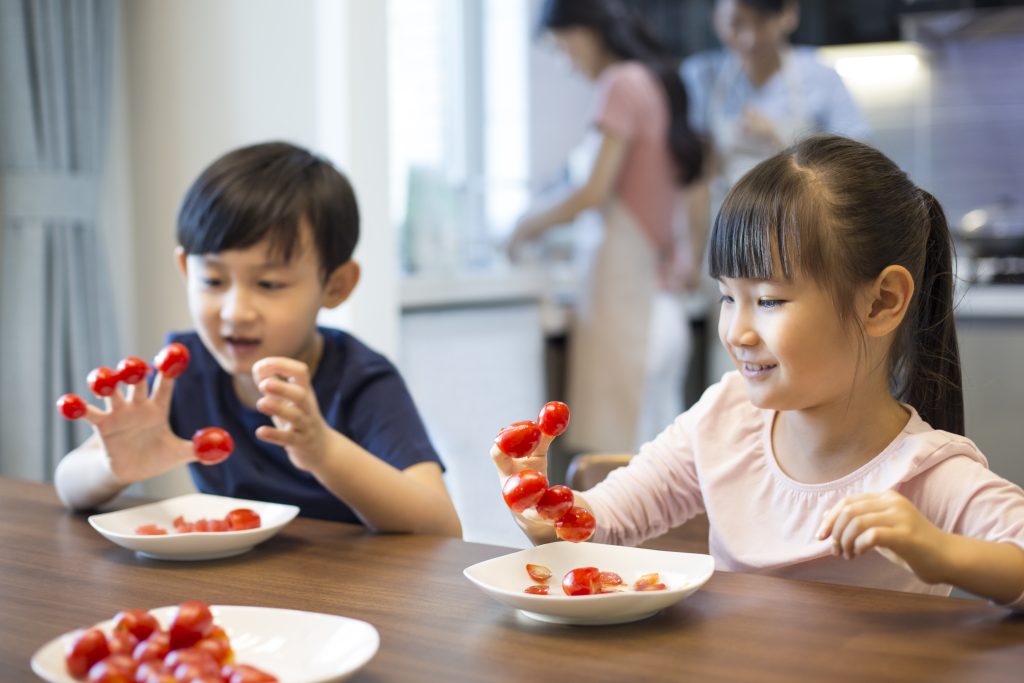
Count What You Have
- Start with something simple: How many crackers are on the plate? Let’s count the apple slices! How many blueberries do you see?
- Count them together, inviting them to touch each piece as you say the number. Then, older preschoolers might count a larger group or play around with what happens when the number changes: You have five crackers. What happens if you eat one? How many do you have now?
You don’t need to turn every bite into a math problem. Follow your child’s interest and keep it playful.
Sort It Out
Does your snack have different colors, shapes, or types of food? Try sorting it!
- Put the red pieces here and the green pieces there. Or, separate round crackers from square ones. You can also sort their snack mix by type. Then talk about what you notice.
- Which group has more? Are there fewer in the other group? Let’s count. Do any groups have the same number?
Sorting naturally helps children notice how things are alike and different, which is an important early math skill.
Compare Sizes
Snack time also gives you plenty of opportunities to explore words like big, small, long, short, more, less, same, and different. You can even put a few pieces in order from smallest to biggest. Try asking: Which strawberry is bigger? Which pretzel is longer? Do we have more apple slices or crackers?
Best of all, there’s no quiz at the end. You’re simply giving your child words to describe what they see.
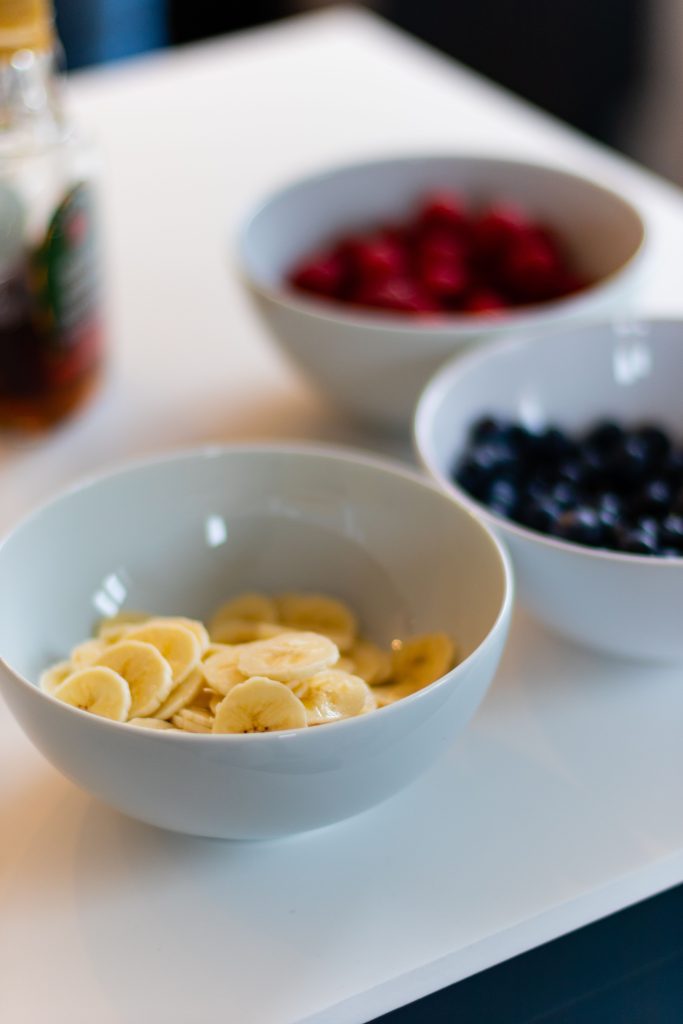
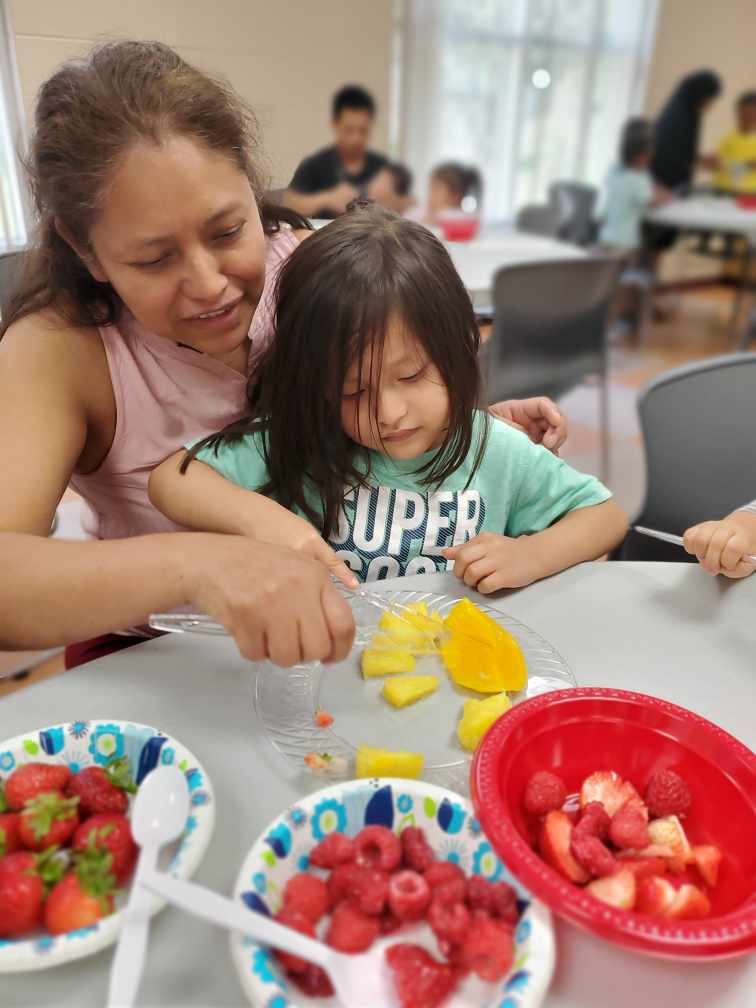
Make a Pattern
If you have two kinds of food, try making a simple pattern:
- Cracker, berry, cracker, berry.
- Apple, cheese, apple, cheese.
Then ask, “What comes next?” Once your child gets the idea, switch roles. Then let them make a pattern for you to finish. Remember, patterns aren’t just for snack time. You can try the same game another day with blocks, socks, crayons, or toys!
Share It Fairly
Sharing a snack can introduce another kind of math: We have six crackers and two people. How could we share them? Let your child decide how to pass out each piece between you.
As they play, they’re beginning to explore numbers and amounts with something they can see, touch, stack, and move. In fact, teachers have a name for objects children use this way: manipulatives. Snack time means there’s lots to play with.
Let Your Child Lead
You don’t need to do all these activities at once. In fact, please don’t! Choose one on a day when it fits naturally with the snack.
Some days your child might want to count every blueberry. Other days, they might just want to eat all the blueberries. Either way, that’s okay. The goal isn’t to make snack time feel like school. Instead, it’s about noticing the learning opportunities already built into your day and having some silly, smart fun together.

Keep the Learning Going
Everyday moments are full of chances to learn together. Way to Grow helps Twin Cities families make the most of them through free, year-round programs for families with children from pregnancy through third grade. Want to learn more? Explore Way to Grow’s programs and find out how to enroll your family. And if you’re looking for more easy activities, helpful tips, and family resources, subscribe to our newsletter or follow Way to Grow on social media! 🧡