
It is Children’s Mental Health Awareness Week, which makes this a good moment to talk about something most parents wonder about at one point or another. You watch your child closely, and every so often you catch yourself asking whether a hard week means something more. Mom Enough, a parenting resource we trust, offers a clear way to think about your child’s mental health. One hard day rarely tells you much. A pattern that repeats over time tells you a great deal.
Every child has rough stretches: a toddler falls apart over the wrong color cup, and a second grader insists that school is the worst place ever invented. These moments are a normal part of growing up. What deserves a closer look is the behavior that settles in and stays, because that is often where a real concern starts.
Three signs to notice in your child’s mental health
When you are trying to tell the difference between a phase and a pattern, three questions can guide you.
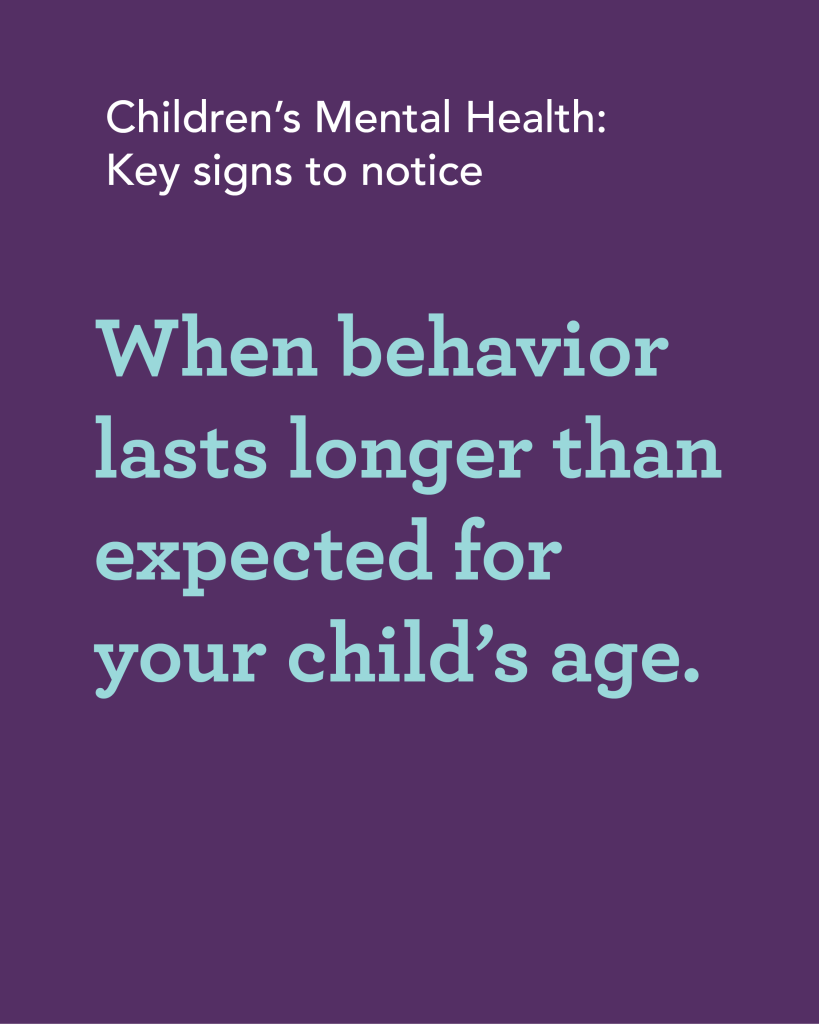
First, notice when a behavior lasts longer than you would expect for your child’s age. Big feelings come with every stage of childhood. However, when those feelings stretch on well past what fits your child’s age, the change is worth your attention.
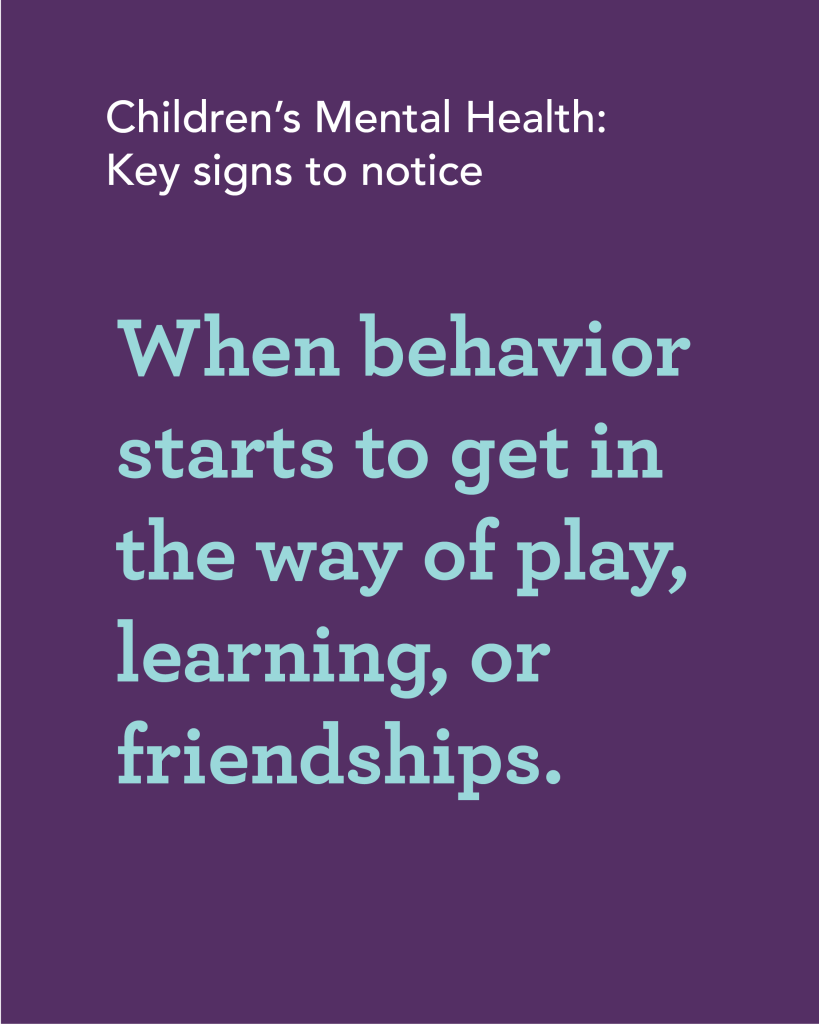
Second, notice when a behavior starts to get in the way of play, learning, or friendships. The question is not whether a feeling runs strong, because strong feelings are healthy. Instead, the question is whether that feeling is pulling your child away from the things that usually bring them joy.
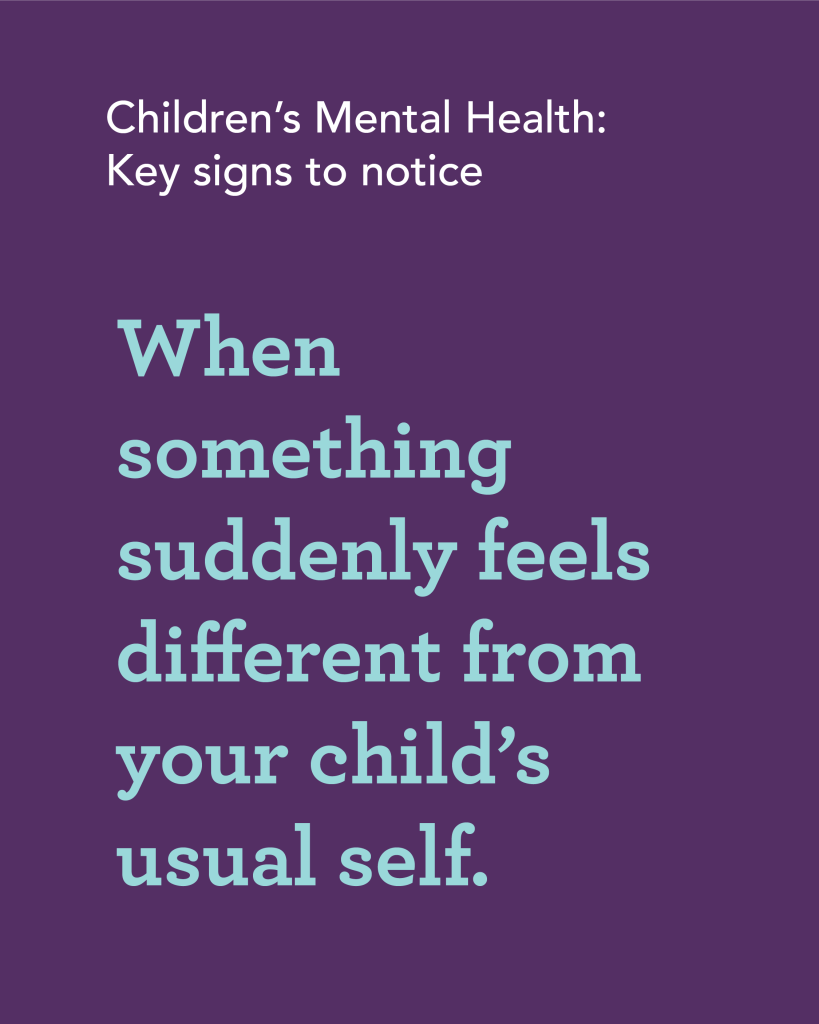
Third, notice when something suddenly feels different from your child’s usual self. You know your child’s baseline better than anyone does, so when a child seems like a stranger to their own routines, that shift is telling you something.
Trust what you are noticing
You spend more time with your child than any teacher, coach, or doctor does. As a result, you are often the first to sense when something is off, and that instinct is worth trusting. If you are noticing one or more of these signs, you do not need to wait until you feel certain before you act.
Early help makes a real difference. A conversation with your child’s doctor, a school counselor, or a mental health provider is a strong first step. In addition, naming a worry out loud often makes the next step clearer. You do not have to hold all the answers before you reach out.
Help is available right now
If you are worried about your child’s safety today, please reach out without waiting. In Hennepin County, the COPE mobile crisis team answers calls 24 hours a day, every day of the year, at no cost, and the team can come to you. You can reach COPE at 612-596-1223. You can also call or text the 988 Suicide and Crisis Lifeline at any hour.
We adapted this resource from Mom Enough (momenough.com). We are also honored to welcome them as the keynote at Education is Power later this month.