
What do children and caregivers need to thrive? It’s a question Way to Grow works to answer every day, and at this year’s Education is Power, it became the center of a remarkable conversation.
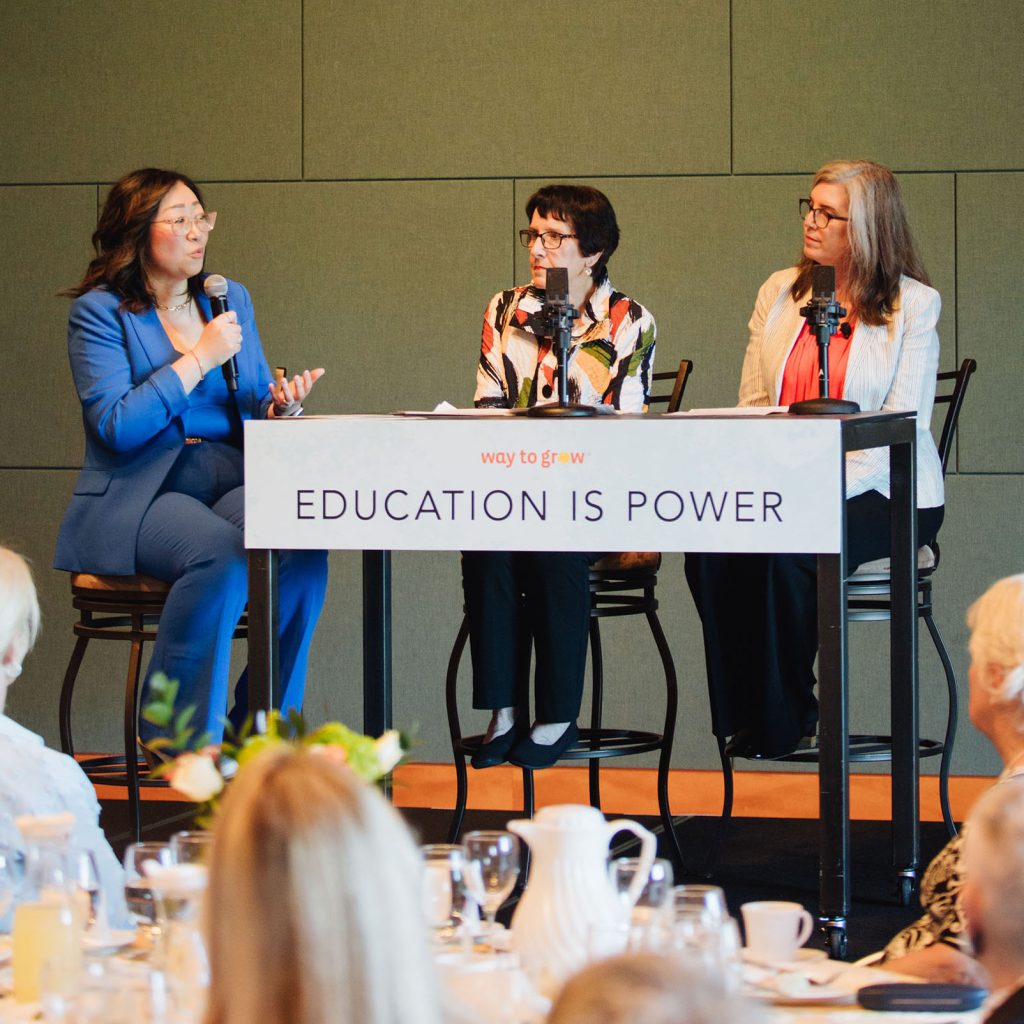
To help celebrate the 20th anniversary of Mom Enough®, Dr. Marti Erickson and Dr. Erin Erickson joined Way to Grow for a live recording of their longtime parenting podcast. This time, the usual roles were reversed. Instead of welcoming a guest to the stage, Dr. Marti and Dr. Erin handed the questions over to Way to Grow CEO Coco Du. Together, they talked about “good enough” parenting, early childhood development, home visiting, and the trusted relationships that help children and families thrive.
The full podcast episode is available now at momenough.com, and you can watch the entire Education is Power event on Way to Grow’s YouTube channel. Earlier this month, Dr. Marti sat down with KARE 11 host Rena Sargianopoulis to talk about what it means to be a “good enough” parent, what children need to develop well, and what has changed for families in the 20 years since Mom Enough first launched. KARE refers viewers to Mom Enough’s Way to Grow episode for the full Education is Power conversation.
What Does “Good Enough” Parenting Actually Mean?
Coco shared a conversation she and Dr. Marti had earlier this year with EIP guests: “There is no such thing as perfect parenting. We chase it. We compare ourselves to it. And we carry so much guilt and shame when we fall short of it.” If there’s no such thing as perfect parenting, she asked, what does it actually mean to be good enough?
Dr. Marti explained that the idea comes from British pediatrician and psychoanalyst Donald Winnicott. He suggested there are three ways to think about parenting: parent too little, parent too much, or parent enough. Being good enough means noticing your child, responding to their needs, and being willing to repair the relationship when difficult moments happen. As Mom Enough puts it: children don’t need perfect parents. They need parents who show up with presence, love, and consistency.
Dr. Erin added that those difficult moments are part of every family. “No relationship is perfect,” she reminded the audience. “It’s unreasonable to expect that there aren’t going to be challenges.” The goal isn’t perfection. It’s staying connected and coming back to each other when things go sideways.
Why Relationships Matter in Early Childhood
Earlier in the program, a mother and son shared their story about the trusted adults who walk alongside them as part of Way to Grow’s home visiting program. Coco connected those experiences to the research, asking why relationships matter so much during a child’s earliest years.
Dr. Marti explained that babies are born ready to form close relationships with caring adults. When caregivers respond consistently and sensitively, children develop secure attachment. In simple terms, children learn two important things: I can trust this person, and over time: I can trust myself. Those early relationships become the foundation for learning, resilience, empathy, and healthy development.
“That secure base is what gives children the confidence to go out and explore the world, knowing there’s someone there to come back to.” — Dr. Marti Erickson
The conversation then turned to parents and caregivers themselves. Dr. Erin talked about what she called a parallel process. Parents also need trusted relationships where they feel supported and understood. Home visiting creates that opportunity. A Family Educator builds a relationship with the caregiver, creating space for reflection and confidence that naturally extends into the parent-child relationship.
“The relationship the home visitor has with the parent is the same relationship we want the parent to have with the child — safe, trusting, consistent.” — Dr. Erin Erickson


Questions From the Room
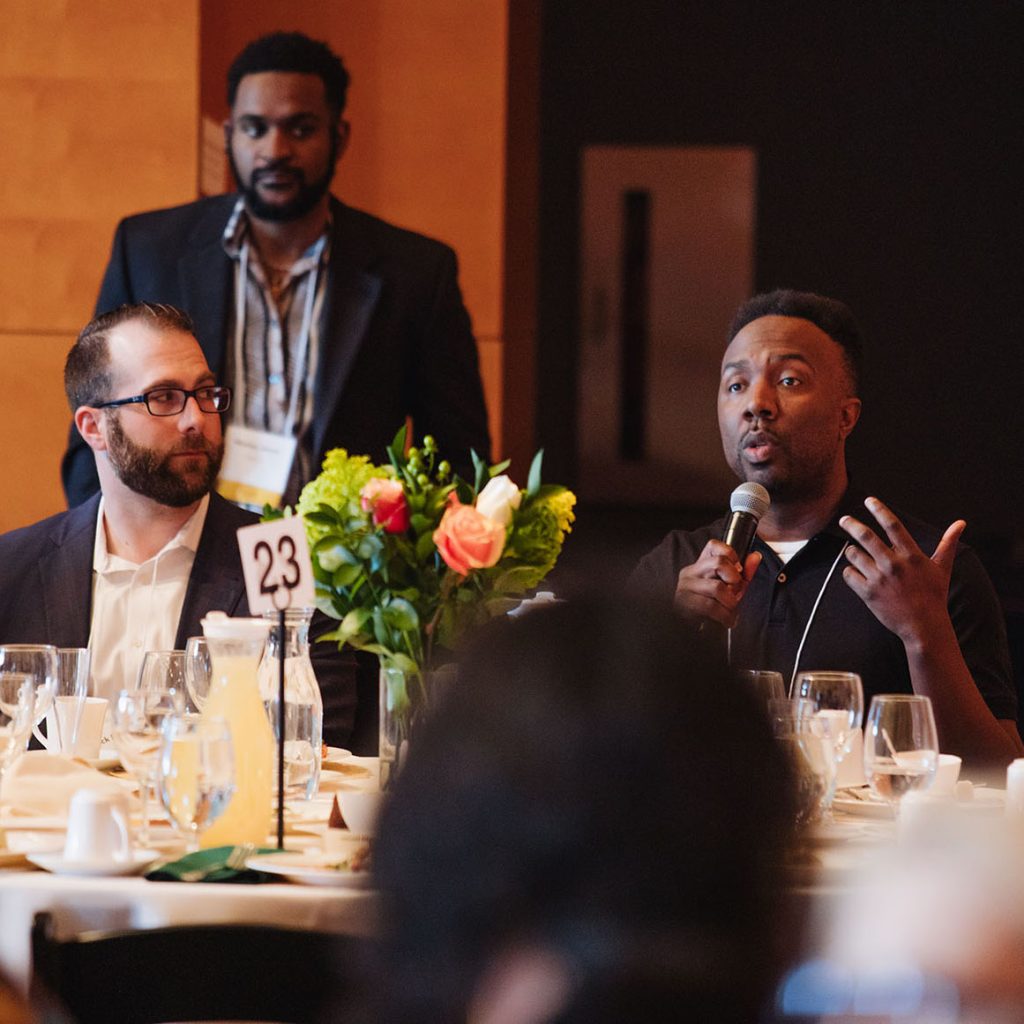
Following Coco’s conversation with Dr. Marti and Dr. Erin, audience members had a chance to ask their own questions.
One question looked back over the twenty years since Mom Enough first began: what has changed for families? Both Ericksons pointed to the growing presence of technology. Phones and constant digital connection have changed the way adults and children spend time together.
Dr. Erin cited a major meta-analysis from JAMA Pediatrics published in 2025, which found that technology use was linked to children having a harder time learning, forming close relationships, and getting along with others.
Research on what scientists call “technoference” — when technology gets in the way of family time — found that 70% of parents engage with devices during meals and play. Dr. Erin was quick to note that this isn’t about guilt because every parent picks up their phone. It’s simply a reminder of what children are paying attention to, and what they need most from us. “It means putting down your phone and being with your child,” Dr. Erin said. “That can happen at any age.”
Other questions focused on early childhood home visiting and co-parenting. Dr. Marti explained that relationships begin long before a baby is born. Parents are already preparing, wondering, and building hopes for their child. Supporting families during pregnancy helps create a strong foundation from the very beginning. “We can’t wait until age three,” she said, “because so much development has already happened by then.”
Dr. Erin encouraged parents and caregivers navigating different parenting styles to begin with shared values. Children benefit from consistency rather than demanding parents approach things the exact same way. What matters is that parents work together towards shared goals rather than against one another.

What Children Really Need
As the conversation drew to a close, a few ideas came into focus. First was that good enough parenting is not about getting everything right. It’s about being present, staying connected, and having the support around you so that you can keep showing up. It’s what the research says, and it’s what Way to Grow families report experiencing in their own lives. In fact, Way to Grow has been building those relationships with Twin Cities families for more than 35 years.
Dr. Marti closed by saying:
“We really need to pull together as a community, as a society, to think about what children need — that sensitive, predictable, secure experience — and think about the things that really stand in the way of that.”
If you’d like to be part of Way to Grow’s community, your support makes it possible for families to have this kind of consistent care, week after week, from pregnancy through third grade. Give at waytogrow.org/give.